Why Posture is Important in Cycling
A key component to cycling enjoyment is rider comfort. Most bike shops will help you with a general bike setup which includes your seat height and if you are lucky your handle bar position. It’s an important start, though doesn’t address what happens to your cycling posture once your foot hits the pedal.
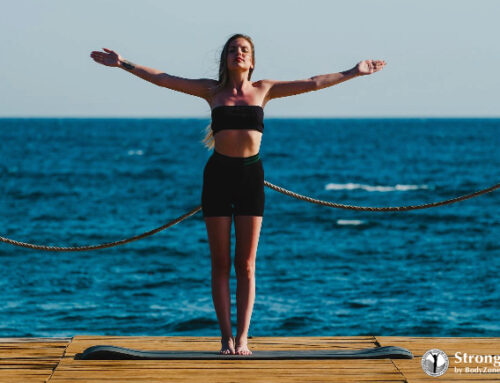
Stable and StrongPosture® promotes balanced motion.
Why do we need balanced motion? Bicycles are symmetrical, humans aren’t.
Imagine one crank arm being longer than the other, or your left handle being further than your right. If your body moves asymmetrically, this could effectively be the case.
Unbalanced Motion and Poor Posture stress muscles and joints, causing injuries. Eventually, this leads you to the Pain (Bi)Cycle.

Cycling Posture
The Pain Cycle begins as a functional compensation, and over time progresses to a structural adaptation as the body learns to move in pain avoidance patterns. While cycling with these adaptive posture patterns, some muscles become chronically tight and others weaken as injured tissues are avoided. Function, or how we do things, changes. Asymmetric posture and unbalanced or “trick” patterns of motion cause some ligaments to shorten and others to stretch as some joints stiffen and others become unstable. Whether the cycle begins with unbalanced motion from injury or even habitual poor posture (even too much time in seated and stretched position on bike), the body compensates for pain by moving differently, compensating and adapting in an ever worsening downward cycle of poor posture, poor balance, and increased biomechanical stress.
The Pain Cycle of injury-pain-compensation-adaptation creates a vicious cycle of poor posture, adaptive body motion, increased bio mechanical stress and premature degeneration.
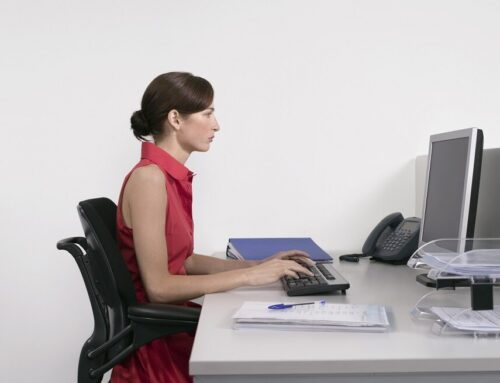
Focused posture exercise breaks the Pain Cycle with a virtuous cycle of balanced motion.
The Motion Cycle is the solution for the pain cycle’s asymmetrical, compensatory poor posture and adaptive body motion patterns. When joints are unlocked to move freely and muscles trained to stabilize through a full range of motion, weak muscles strengthen, adaptively tight muscles stretch, and ligaments adapt in a virtuous cycle of motion. The body moves in a chain of motion, also known as a kinetic chain.
Your Cycling Posture
If you think of a bicycle chain and how it moves over a chainring to drive your bicycle, you can understand how important it is that each link moves freely to ensure that your drive chain doesn’t slip, works efficiently and doesn’t cause early wear on your chainrings and cassette. The same can be said for these kinetic chains of motion. Just one single stiff link or joints affects the entire chain – your cycling posture – and how it works.
Author: Johan Dorfling is an avid cyclist, personal trainer and Certified Posture Exercise Professional (CPEP) based in South Africa. See Improving cycling posture and biomechanics for endurance and injury prevention.