Do you notice your shoulders rounding when you look in the mirror? Do you find yourself stiff after sitting for a long time? Is leaning forward when you walk something you’ve noticed yourself doing? These are things that start to happen after you turn 60, but it doesn’t mean you have to just give in and accept you’ll be hunching over.
There are a number of easy changes you can make to your daily life that will improve your posture, make you feel better about the way your body feels, and help you feel more mobile. You don’t need to do an intense, lengthy workout to see improvements. This will improve significantly with small, daily changes and habits you can easily instill.
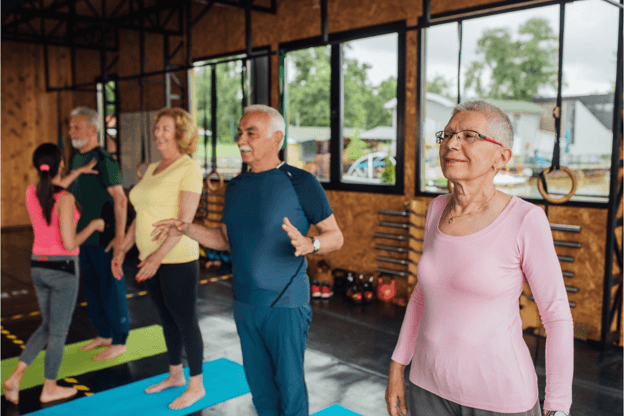
Why Does Posture Change After 60?
Of course, your body is going to change as you get older. You’ll lose some muscle. Your joints will get stiffer, and your flexibility will diminish. Overall, this will make it harder to keep yourself upright, especially if you’re sitting for long periods or looking down for extended periods.
Daily activities definitely play a role. People who spend a lot of time slouching on the couch, working at a low desk, or walking with their head forward are more likely to adopt those habits as their default posture. Osteoporosis and arthritis can also affect posture, so age-related postural changes are not always habit-related.
This doesn’t mean you should always try to keep your back perfectly straight. There is a balance between trying to be perfectly aligned and just trying to maintain normal, natural alignment.
Why Good Posture Matters as You Get Older
Posture affects a surprising number of activities in daily life. Good posture can make it easier to get dressed in the morning, make breakfast, clean the house, and do all the other little things you do during the day. Good posture can even help you walk with a normal, healthy, and confident gait.
Practicing gentle movement can help you become more mindful of your posture, especially when you do so daily.
Five Gentle Exercises to Improve Posture
Find a comfortable spot with good lighting. You’ll need good supportive footwear if you’re doing any standing exercises and a sturdy chair or counter to help you balance. Move slowly and breathe naturally. Don’t push through any pain.
1. Shoulder Rolls
Shoulder rolls are a way to release any tension you may have in your shoulders and provide an awareness of different parts of your body.
How to do it:
- Sit, or stand with feet hip-width apart.
- Let your arms hang by your sides.
- Roll your shoulders up and then back, and then down.
- Repeat 5-10 times.
- If you feel comfortable, repeat steps 1-4 in reverse order.
If you find yourself reading, watching TV, or using a computer for long periods of time, do a few sets of shoulder rolls to release any tension you may have.
2. Chin Tucks
Are you someone who is always looking down at your phone? Or someone who always leans their head forward when reading? Chin tucks may be an exercise you want to add to your routine.
How to do it:
- Sit with your shoulders relaxed and your back as straight as you can.
- Look forward with your chin level.
- Make a double chin.
- Hold for 3-5 seconds.
- Repeat 5-10 times.
If you’re having trouble maintaining the position, place your hand on your forehead. Don’t tip your head down or lift your chin. The movement should be small and comfortable. Stop if it causes any neck pain, dizziness, or other odd symptoms.
3. Seated Torso Rotations
Turning your upper body helps you maintain mobility for day-to-day activities, such as looking behind you or reaching for something to your side.
How to do it:
- Sit in a good, solid chair near the front, with your feet flat on the floor.
- Either cross your arms over your chest or rest your hands on your thighs.
- Turn your upper body to the right as far as is comfortable.
- Return to the center, then turn left.
- Repeat 3 to 5 times on each side.
To start, you may want to turn as far as is comfortable for you. However, the main benefit of this exercise is getting used to moving in a comfortable, controlled way. The movement doesn’t need to be large in order to get the benefit.
4. Wall Posture Exercise
A wall can be a good reference point for your posture.
How to do it:
- Place your back against a wall, and your feet a couple of inches away from the wall.
- Place your upper back and hips against the wall if it’s comfortable.
- Pull your shoulders back and down, and keep your chin level.
- Hold for 10 to 20 seconds.
- Repeat 2 to 3 times.
It’s okay if your head doesn’t touch the wall. You don’t have to make your back flat to touch the wall with your entire back.
5. Supported Standing Exercise
Practicing various standing exercises will help you work on the upright position and increase your confidence in standing and staying steady.
How to do it:
- Position yourself behind a chair or at a counter, and hold onto it for support.
- Your feet should be about hip-width apart.
- Stand tall and open the front of your chest.
- Relax your shoulders.
- Gently pull down your stomach to take the slack out of your abdomen.
- Hold this position for 10-20 seconds 2-3 times.
It’s okay to start with a shorter hold. If standing for any length of time is problematic for you, don’t do this exercise without support.
Make Posture Awareness Part of Your Daily Routine
Exercises are helpful, but day-to-day habits are very important. You don’t need to constantly monitor your posture. A few reminders will help.
- Take plenty of breaks. If you find yourself sitting for extended periods, get up and take a quick movement break every 30-60 minutes.
- Make sure your seat supports your back. If you do not have a good quality chair, make sure to get up and move every 20-30 minutes.
- Raise your work surface. A good way to do this is to raise your work surface to eye level so you are not bending forward as much.
- Do regular posture checks. You should be doing a check every time you take a break to move. To do a posture check, all you have to do is take a normal breath, relax your shoulders, and level your chin.
- Take breaks how you see fit. You should be actively moving throughout the day. Some good activities are walking and gentle strength and flexibility exercises. If standing exercises are difficult for you, try chair yoga for seniors.
Posture is best improved by moving throughout the day. This is usually better than keeping a rigid, upright posture all day.
How to Exercise Safely After 60
It is better to start with just one or two exercises and gradually increase the number as your body becomes accustomed to them. Consistency is more important than intensity. You can also do a short session in the morning and repeat it a few times throughout the day.
Stay within your comfort zone and don’t exercise to the point of shortness of breath. You should stop if you feel sharp pain, dizziness, or chest discomfort. If you have back or neck pain, significant balance issues, osteoporosis, or other concerns, it is best to consult your doctor before starting any exercises. A physical therapist may also be able to assist you.
Small Steps Can Help You Stand Taller
There is more to improving your posture than simply standing up straight. This is especially true after 60. Most people don’t realize the negative impact their daily activities have on their bodies. It is especially important to gain this awareness and move in ways that foster an overall sense of well-being and usefulness.
Gently moving your neck in circles, rolling your shoulders, or moving your ears over your shoulders are simple exercises that improve your posture. Moving in general helps you become more mindful of your body.
At any age, you can improve your mobility if you are patient and do the appropriate exercises. This will help you feel more comfortable while remaining active.