Link Between Posture Awareness & Pain
A recent study supports conventional wisdom- Posture awareness and pain are really and truly intimately linked. Osser et al.’s 2025 study of the modern malady of Tech Neck[1] and found a statistically extremely significant relationship (p<0.001!) between posture awareness and symptom intensity of neck pain.
It wasn’t simply “bad posture”. Osser’s research confirms what many practitioners clinically and behaviorally observe: individuals with greater postural awareness report less severe musculoskeletal symptoms. This finding is particularly relevant given the increasing prevalence of neck pain, back pain, and even eye strain in modern work environments.
This was an implicit assumption of our paper in Frontiers in Neuroscience, “Interoceptive Posture Awareness and Accuracy: A Novel Photographic Strategy Towards Making Posture Actionable,[2](IPA&A)” where we posited a fundamental connection between the interoceptive and proprioceptive sensation that drive posture awareness, thus shaping motor control.
IPA&A Methodology
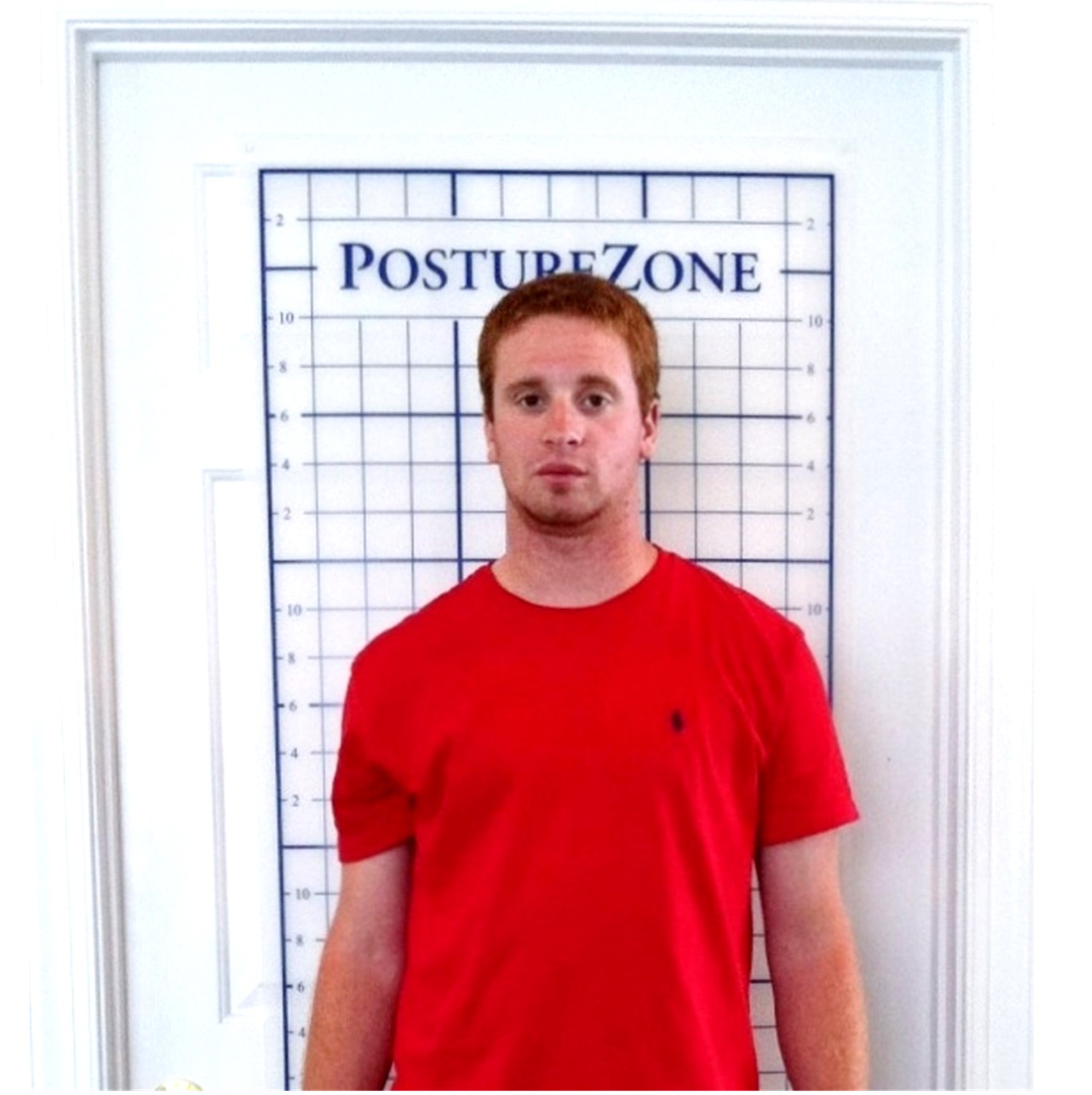
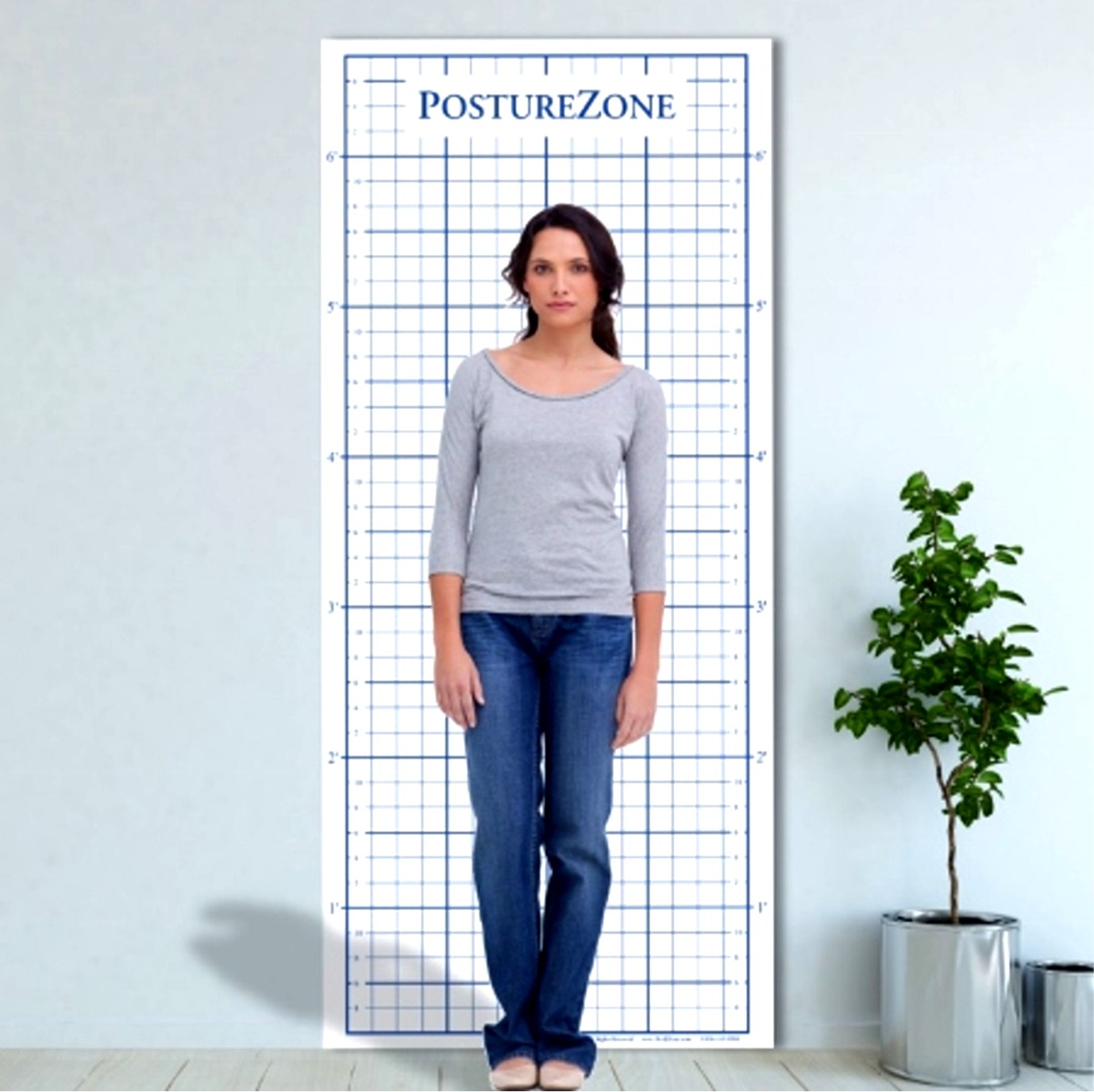
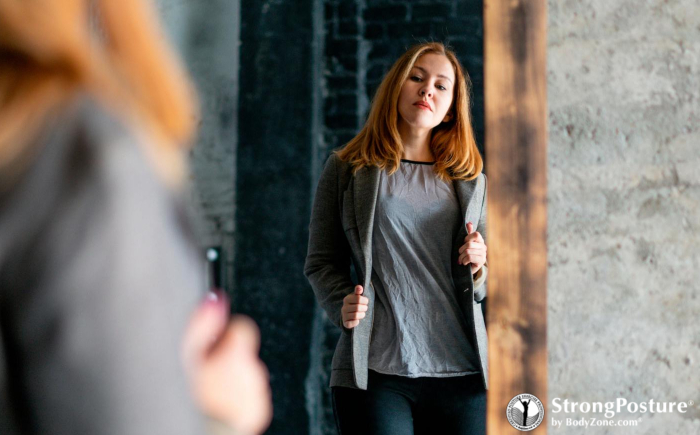
In our IPA&A paper we also shared a simple protocol to benchmark posture awareness and postural control. Using a standardized grid to systematically document posture through a series of four photographs can capture the relative positions and deviations of the key zones of postural mass in bipedal and unipedal balance. This methodology provides practitioners with an evidence-based tool to benchmark and track improvements across various treatment modalities, from passive therapies including chiropractic care to active interventions like yoga and tai-chi, as well as the StrongPosture® protocols.

Critical Role of Awareness
The key insight linking both studies is the critical role of awareness. Interoception is our awareness of internal bodily sensations, and thus is key in shaping posture and motor control. While traditional approaches to address posture focus primarily on external alignment, understanding the interplay between internal awareness and external positioning provides insight for treatment strategies aligning interoceptive, proprioceptive and tactile inputs with motor outputs.
For clinicians, this four-photo assessment protocol is a practical method to document progress while enhancing patient engagement. Posture picture images against a standardized grid is an approach that synergizes particularly well with spinal manipulation and segmental mobilization techniques.

Linking BodyMind with MindBody
This provides objective feedback while building patient awareness and encouraging participation in their care- in office, and at home. It’s a key tool for practices using StrongPosture® rehab exercise protocols and education for somatic motor control accuracy melded with common sense concepts to address modern life’s challenges of hours spent with attentional focus locked on a screen with the body in a prolonged sitting and flexed posture.
In other words, its a strategy to integrate BodyMind with MindBody, and self-care with clinical care.

[1] Osser paper-Osser, B., Toth, C., Nistor-Cseppento, C. D., Osser, G., Miuța, C. C., Ilia, I. et al. (2025). Evaluating Tech Neck: A Pilot Study Using a Self-Developed Questionnaire on Symptoms, Posture, and Preventive Measures. Children, 12(1), 102.
[2] Weiniger, S. P., & Schilaty, N. D. (2024). Interoceptive posture awareness and accuracy: a novel photographic strategy towards making posture actionable. Front Neurosci, 18, 1359594.