


DEVELOPING A SUCCESSFUL MEDICAL MASSAGE PRACTICE
The purpose of medical massage therapy is to treat and to assist the healing process in musculo-skeletal conditions, and in acute and chronic pain related to connective tissue disorders. The medical massage therapist may work in independent private practice, a group practice, or in a medical clinic or hospital setting. This article describes how a successful medical massage practice can be developed and how the medical massage practice “economic model” differs from the standard relaxation massage practice.
Medical massage therapists work with the following patients or problems:
- Premature infants
- Pediatric patients
- Obstetric patients
- People with traumatic injuries
- People with sports injuries
- People with back or neck problems
- Stroke victims
- Automobile injuries
- Joint injuries or point diseases
- Geriatric patients
- Repetitive strain injuries
- Athletes in training or competition
- Corporate wellness programs
- Dental trauma and TMJ
- Degenerative diseases such as MD, MS, Parkinson disease or neurological problems
- Post-operative conditions such as joint surgery
- Psychological trauma
- Dancers and performing artists
- Sports teams
- Major group athletic events
The medical massage practice model is not significantly different from any other allied health care practice such as physical or occupational therapy, indeed, the medical massage therapist may also be a physical or occupational therapist, nurse, physician assistant or other health care professional. The medical massage therapists scope of practice will vary from State to State and depends upon State licensure issues, other training and licensure the medical massage therapist may have, and the working environment within which the medical massage therapist is employed and supervised.
Training in medical massage requires a highly specialized school curriculum and a higher level of practitioner commitment to the educational process than currently exists in most therapeutic massage schools.
The Medical Massage Economic Model:
The medical massage economic model is the primary reason for the success of the medical massage practice. This economic model simply copies the same fee for service model used in medical billing. Standard relaxation massage practices have a very high rate of practice failure and relaxation massage therapists in general have very poor occupational longevity. Salon and spa massage therapists do a little better if they land positions in successful salons or spas, but the pay is lower and working in these environments can feel a lot like assembly line factory work.
A medical massage practice provides a daily, hour to hour, diversity of conditions and patients treated, this diversity helps to prevent therapist burnout. There are no specific expectations for the spa’s chemicals or massage oils used, as these types of practices typically include a range of natural, therapeutic, organic and prescriptive.
The typical medical massage office would have two or more treatment rooms, three is ideal for one or two therapists. Multiple patients are scheduled per hour and are treated with manual and medical massage technique along with appropriate therapeutic modalities, such as infra red heat treatment. By seeing more than one patient per hour, and specifically treating that patients chief complaint, the medical massage therapist can charge less per patient visit and still collect a high professional rate per hour. For example, patient A is scheduled at 8 AM and receives twenty minutes of medical massage and manual therapy treatment. Patient B has arrived at 8:15 AM and is put in the second treatment room with infra red heat treatment. Patient A also is set up for heat treatment and the therapist goes to patient B and begins to perform medical massage and manual therapy treatment on patient B.
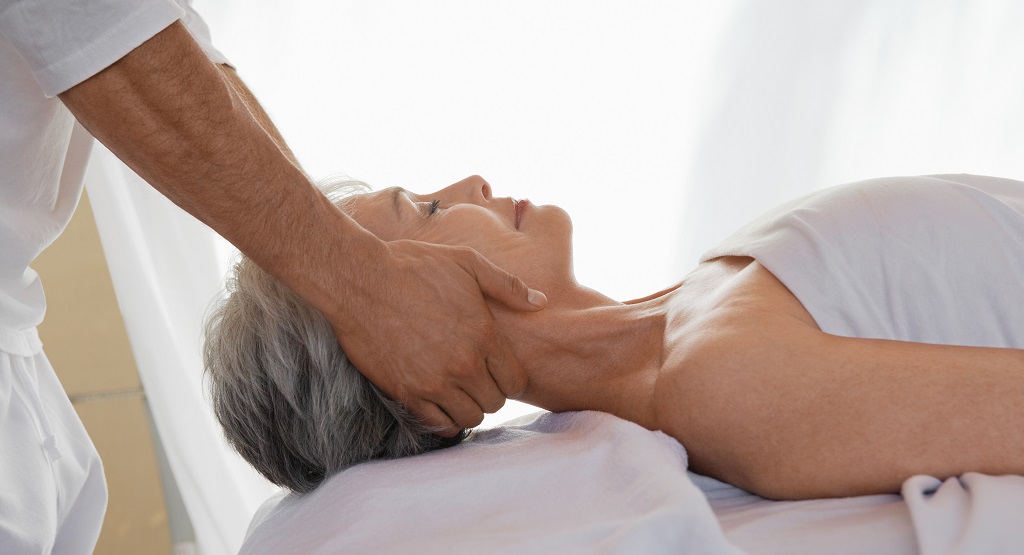
In the medical massage practice multiple patients are seen per hour using this format. This scheduling technique only requires a little time to get use to. The medical massage therapist will need to leave small 15 minutes breaks in their schedule about every hour and a half. Case notes and office organization can be performed after lunch and at the end of the day.
This operational format allows the medical massage therapist to achieve the following:
·Charge less per patient than the competition.
·See more patients and get more referrals.
·Bill for multiple services.
·Bill insurance carriers in an appropriate manner.
·See patients who really need medical massage treatment.
·See patients who cannot afford the high rates charged by relaxation, salon, and spa massage therapists.
·Earn more per treatment hour, and per year than other massage therapists.
·Build dynamic clinically based medical massage practices.
However, probably the most important aspect of this scheduling model is the fact that every patient seen by the medical massage therapist presents with a different problem, which makes medical massage therapy a very diverse and interesting practice, everyday! A major reason for occupational failure in relaxation based massage practice is simply burnout from performing the same basic massage over and over again. This is not a problem for the medical massage therapist since every patient requires a different treatment approach.
Working Environments for Medical Massage Therapists:
The employment opportunities for the medical massage therapist are increasing year by year. More opportunities have opened up for the medical massage therapist in hospitals, chiropractic, and medical settings. he medical massage therapist may also work in a private or a group practice environment. Some medical massage therapists also conduct home therapy visits for the elderly and special needs patients. Some corporations retain medical massage therapists to treat employees on the job.
The medical massage therapist should develop an area of professional specialty and become known for their expertise in this field. Some therapists provide specific services for women or patient populations with special needs such as arthritis or multiple sclerosis. Specialty fields could include any of the areas mentioned in the column preceding this section. Once a medical massage therapist has developed a specialty they should associate with and educate professionals from other treatment disciplines working in the same field. It is important to develop a referral network of professionals to whom you can refer clients and receive referrals from other therapists.
Medical massage therapists are often allied medical personnel who are multi-skilled health care professionals
Educating the Market:
Since medical massage therapy is a new profession within a very old profession, the medical massage therapist needs to educate the market place. This educational process includes clients and other health care professionals. The educational process is a vital part of the therapist’s success in the business of medical massage therapy. In a sense this part of the duties of the medical massage therapist is never finished, but is an ongoing responsibility and a vital part of the development of a successful medical massage therapy practice. The following is a partial list of ways in which the medical massage therapist can educate the public, clients, and other health care professionals.
-
The medical massage therapist can become multi-skilled and provide services as a personal trainer in a health club or other athletic environment. This multi-skilled level of professional service allows the medical massage therapist to promote and build a therapy relationship with sports minded clients. Medical massage therapists interested in fitness training certification should contact the American College of Sports Medicine, ACSM Certification Resource Center. Massage therapists interested in posture and helping people to stay active should contact PosturePractice.com about becoming a CPEP® Certified Posture Specialist.
-
The medical massage therapist can provide training classes in exercise, therapeutic exercise, stretching, casual leisure massage for the public, and/or therapy classes directed at specific patient populations, such as low back pain, arthritis, or MS.
-
The medical massage therapist can conduct professional training seminars for other health care providers on an area of specialty. This seminar format could be in a brief lunch and lecture format.
-
The medical massage therapist should prepare brief information handouts for clients and health care professionals on the musculo skeletal problems treated by the medical massage therapist.
Patient education and retention begins the moment the patient walks into your medical massage clinic.
Marketing and Advertising Strategies for the Medical Massage Therapists:
The yellow pages is the first place that a prospective client will let their “fingers do the walking”. While the yellow pages is a good place to advertise, this is not where you will get most of your patients, most of your patients will come from other patients or professional referrals. The size of an ad in the yellow pages probably does not make much difference. Prospective clients will either go to the largest ad or just proceed alphabetically, or perhaps they are going to pick the closest therapist to either home or work. Do not spend a lot of money on a yellow page ad, the return on investment is poor.
Save your money for a good answering service or a cell phone. A single or double line ad in bold will serve most needs for yellow page advertising. Remember, your yellow page advertising representative works for the company that profits from your advertising, they like to encourage larger ads.
Your well designed and eye catching business card is your most important piece of advertising. Cards can easily be placed or left in a large variety of locations. Your business card should be simple and contain only the information that pertains to your professional credentials and how to reach you. Artwork or photographs are a good idea, but the plain professional card is just as good. Your business card should list your degrees and association memberships. You can add a brief slogan or statement like, “your health is our concern”, but in some States where massage is not a licensed profession statements or claims regarding treatment or cure can be a legal problem. Leave your business card in the following locations:
- With all health care professionals
- Anywhere you make a business call
- Health clubs
- Health food stores
- Associations that services patient populations that you treat
- Medical clinics
- Dental clinics
- Psychology clinics
- At all group athletic events
- Health fairs
- Public bulletin boards
- With the waitress that served your lunch
- With service clubs and organizations
- With support groups
- Anywhere that makes sense to you
The locations mentioned above are also the contacts that you want to develop as referral sources.For example, health food stores see a lot of health conscious people in a single day.If you offered to provide discounted medical massage therapy treatment to health food store staff, the staff in turn would probably not hesitate to refer patients to you.Dentists often inflict dental trauma while providing dental care.Dentists normally care for hundreds of patients, a single dentist referring to you could provide you with many patient visits.Psychologists see many patients who are experiencing various levels ofstress and who experience muscle spasm, pain and/or headaches or other health care problems.Psychologists are a good source to market, they frequently practice in groups and you could offer them discounted care in order to educate them regarding your services.
Some weekly newspapers are a good source for inexpensive advertising.It is not the size of the ad that is important, but rather, consistency in advertising.In other words place a small inexpensive ad and leave it in place for weeks or months.A single ad or a short term ad is usually not very effective.The best buy in most small newspapers is the classified ad section, it is usually very inexpensive and in a small weekly paper it is usually read about as well as the rest of the paper.A one or two inch ad is usually a good purchase and once again in a small paper still gets the attention of most readers.If after an ad has run for two or three months no one seems to have seen it, find yourself another paper.If you live in a small area with only one paper then every one will see your ad.If you live in a larger area then find out which paper has the best readership and use that one.
The keys to successful marketing are as follows:
- Keep your message simple.
- Use a bold headline or attention statement and then a simple, short message.
- Be consistent, leave the ad in place for weeks.
- Don’t think that you have to spend a lot of money, you don’t.
- Develop a program of regular consistent marketing and advertising exposure.
- Spend time every day marketing your practice.
- Look for free and easy opportunities to educate people regarding your practice.
- Remember the most important education and marketing is done in the office and during the patient visit.
- Your practice will grow mostly from referrals and not from advertising.
- Specialize in posture or another interesting niche to set your services apart from others.
Successful Practice Building:
First of all, here are guaranteed ways to fail in practice:
-
Do not answer your telephone on a consistent basis.
-
Use an answering machine.
-
Do not establish regular office hours.
-
Do not spend time daily planning your practice growth and development.
-
Do not think about your practice.
-
Do not tell people about your practice.
-
Do not educate your patients.
-
Let your patients determine treatment plans and return visits for treatment.
-
Do not ask for referrals.
-
Do not educate your patients in the office.
-
Do not work full time at building your practice.
-
Make sure that you are not available for urgent calls or emergencies.
-
Create a “bankers hours” schedule. Never work evenings or weekends.
-
Practice like everybody else.
-
Over charge for your services.
-
Act like you don’t care.
-
Do not act or dress in a professional manner.
-
Do not return phone calls promptly, within twenty minutes, or at all.
-
Do not visualize or pray for your personal success.
Most massage therapists fail in practice, and statistically most do fail, primarily because theysimplycannot be reached by prospective clients.When wesurveyed massage therapists in one Mid West city on a Monday morning at 11 AM we could not reach one out of forty massage therapists telephoned.Using an answering machine to run your office is a guaranteed way to assure your failure in practice.People want to reach a real human being and not a machine.In this age of advanced telecommunications you have many communications options.The best method of handling incoming calls is with a cell phone that you personally answer ten to twelve hours per day.The second best method is an answering service with a live operator answering your telephone and then paging you with the message,then you return the call within twenty minutes.
Patient retention and practice building begin the moment the patient enters your office. Patient education should be provided while the patient is still on your table and during treatment.This educational process serves several important functions, but the most important thing that it does, from the perspective of this guideline on practice building, isit increases patient retention and rescheduling.In many cases the only time that the patient will have received a detailed explanation of their problem will be as a result of your evaluation and treatment.An educated patient is more likely to seek continued treatment.
While you are educating the patient regarding your findings and the need for continued treatment you need to do the following:
-
Explain exactly why treatment is needed.Provide a detailed description of the soft tissue structures involved and why they need your specific treatment.
-
Explain that you need to see the patient for six visits to treat the condition and that after six visits you and the patient will mutually reassess their condition to determine if further treatment will assist them with their problem.
-
Explain exactly what future visits will involve, describe the therapy to be provided.
-
Explain exactly what you will charge for the visits and how that money is to be paid to you.
-
Whenever possible use anatomical charts and handouts to explain the patients condition. Personalize anatomical handouts by drawing your findings on the handout and give this paper to the patient.
If you want a successful medical massage practice you must behave and conduct yourself like a health care professional at all times:
·You must have regular and convenient practice hours, this should include one or two evenings per week.Some patients need early morning appointments, you should accommodate the needs of your patients.
·You should be either in your office doing paperwork or making marketing phone calls, or out doing practice building activities outside of the office.
·You should attempt to schedule one or two contact lunches with either other professionals or services organizations per week.
·You should always be available by telephone or pager, and you should follow the twenty minute rule,return all telephone calls within twenty minutes.
·You should be available immediately to schedule any urgent appointment, and your answering service should be able to reach you at any time.
·You should establish a reasonable fee schedule that describes both the services that you provide and the fees you charge for each service.As a medical massage therapist these fees should be based on seeing multiple patients per hour.
The patient should be rescheduled for therapy in your office after you have educated the patient regarding the findings, the treatment to be provided, the cost of the treatment, and results you expect to achieve.Once you have ascertained that the patient understands all of this then reschedule the patient while they are still on the table.
The Fee Schedule as a Marketing Component of a Medical Massage Practice:
The medical massage therapist treats patients according to soft tissue findings and the patients presenting condition.This treatment is specific in nature and is provided to the exact anatomical region that is involved in the patient’s chief complaint.Therefore, the majority of patients can be effectively treated in twenty to thirty minutes.This allows the medical massage therapist to charge less per patient treatment but to average more per hour than other massage therapists.The best practice fee collection policy to follow is the cash at time of service policy, or a cash practice.Patients can be provided with a superbill that they can submit to their insurance carrier.With a lower fee per visit rate more patients can both afford to receive therapy from you and to pay in cash.Most health care professionals today would like to or are trying to move to a cash per service arrangement.Relaxation massage therapists who charge $65.00 or more per treatment session have a hard time getting patients to reschedule for two or three appointments per week, or even one appointment per week, and most manual medicine therapy requires a schedule of two to three visits per week.You should also establish a sliding scale for poor or elderly patients so that you can accommodate their special financial needs.What is better a busy dynamic practice or a vacant practice because people cannot afford to see you for therapy?The more patients you bring in, even at a reduced rate, the more referrals you will get from satisfied patients that will build your practice, eventually requiring you to either increase your rates and/or to add another therapist to your practice.You never lose when people see and experience what you can truly do as a medical massage therapist.
Lower cost care allows more patients to access treatment and enables the operation of a cash practice.
The Essential Rules for Medical Massage Practice Success:
-
Be professional at all times.
-
Schedule and treat more than one patient per hour.
-
Develop a realistic and affordable fee schedule.
-
Be responsive, available, and in communication at all times.
-
Follow the 20 minute rule.
-
Accept all appropriate medical massage patients regardless of fee arrangements.
-
Educate and reschedule the patient on the table.
-
Provide the patient with a written report of findings/anatomical drawing.
-
Look like a professional.
-
Keep regular hours.
-
Promote yourself and your practice every day.
-
Give referrals and seek referrals.
-
Go out of your way to serve the needs of your clients and other health care professionals.
-
Put service ahead of profit.
This article was prepared by Gregory T. Lawton, D.N., D.C., a Board Member of the American Medical Massage Association.The American Medical Massage Association is an association that represents a diverse group of medical massage therapists, physicians, physical therapists, occupational therapists, nurses and other allied medical personnel who practice clinical manual therapy for the purpose of connective tissue rehabilitation.